

As a leading steel manufacturer with 17+ years of experience, GNEE Steel specializes in supplying high-quality carbon steel plates, including SA 516 GR 70 SA283 GR C. These two grades are widely used in industrial applications, but their chemical composition, mechanical properties, and use cases differ significantly.
Understanding these differences is critical for choosing the right material for your project-whether it's pressure vessels, storage tanks, or structural components. GNEE provides tailored steel solutions, ensuring compliance with ASTM standards and on-time delivery to 50+ countries.
SA 516 GR 70 vs. SA283 GR C: Core Definition & Standards
SA 516 GR 70SA283 GR C are both carbon steel grades defined by ASTM International, but they belong to different standards for distinct purposes.
- SA 516 GR 70: Specified under ASTM A516, it is a pressure vessel-grade carbon steel designed for low-to-moderate temperature service (down to -30℃). It is engineered to withstand internal pressure, making it ideal for boilers, pressure vessels, and storage tanks for liquids/gases.
- SA283 GR C: Classified under ASTM A283, it is a general-purpose carbon steel for structural and non-pressure applications. It has lower strength requirements and is commonly used for structural components, storage tanks (non-pressurized), and mild-duty industrial parts.
At GNEE, both grades are produced in strict adherence to ASTM standards, with full traceability from raw material to final delivery.
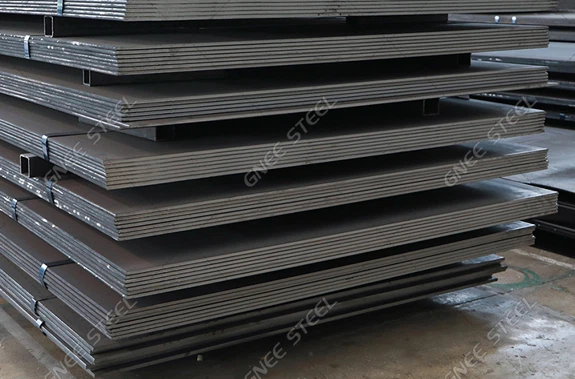
GNEE's warehouse with stacked SA 516 GR 70 and SA283 GR C plates
Chemical Composition: SA 516 GR 70 vs. SA283 GR C
SA 516 GR 70SA283 GR C directly impacts their strength, weldability, and corrosion resistance. The table below outlines key elemental differences (max/min values, in %):
| SA 516 GR 70 | SA283 GR C | |
|---|---|---|
| Max 0.30% | Max 0.24% | |
| 0.79–1.30% | 0.85–1.20% | |
| Max 0.035% | Max 0.040% | |
| Max 0.035% | Max 0.040% | |
| 0.15–0.45% | 0.15–0.40% | |
| Max 0.30% (optional) | Not specified (max 0.30%) |
- SA 516 GR 70: Higher carbon and manganese content enhances its tensile strength and pressure resistance, critical for pressure vessel service.
- SA283 GR C: Lower carbon content improves weldability but reduces overall strength, making it suitable for non-critical structural use.
SA 516 GR 70SA283 GR C.
Mechanical Properties: SA 516 GR 70 vs. SA283 GR C
SA 516 GR 70SA283 GR C, as they determine load-bearing capacity and performance. The table below compares key mechanical indicator:
| SA 516 GR 70 | SA283 GR C | |
|---|---|---|
| 485–620 MPa | 400–550 MPa | |
| 260 MPa | 205 MPa | |
| Elongation (Min, in 200mm) | 21% | 22% |
| Required (down to -30℃) |
- SA 516 GR 70: Higher tensile and yield strength, plus mandatory impact testing, ensure it can withstand pressure and temperature fluctuations in harsh environments.
- SA283 GR C: Lower strength and no mandatory impact testing limit its use to mild conditions (e.g., ambient temperature, low-load structures).
SA 516 GR 70SA283 GR C can be customized with impact tests upon request.

Mechanical testing lab-GNEE technician conducting tensile strength tests on SA 516 GR 70 and SA283 GR C samples
Application Scenarios: SA 516 GR 70 vs. SA283 GR C
SA 516 GR 70SA283 GR C depends on your project's requirements for pressure, temperature, and load. Below are their typical applications:
SA 516 GR 70 Applications:
- Pressure vessels (e.g., chemical reactors, oil refinery vessels).
- Boilers and heat exchangers (for high-temperature fluid handling).
- Pressurized storage tanks (for oil, gas, or petrochemicals).To explore our pressure vessel-grade steel, visit our SA 516 GR 70 Product Page.
SA283 GR C Applications:
- Structural components (e.g., building frames, bridge supports).
- Non-pressurized storage tanks (for water, grain, or non-hazardous materials).
- Mild-duty industrial parts (e.g., brackets, flanges for low-load use).For structural steel solutions, check our SA283 GR C Product Page.
GNEE's engineers help clients select the right grade by analyzing project parameters (e.g., pressure, temperature, load), ensuring optimal performance and cost-effectiveness.
How to Choose Between SA 516 GR 70 and SA283 GR C?
SA 516 GR 70SA283 GR C, follow these 3 steps-used by GNEE's technical team for client consultations:
- : If your project involves internal pressure (e.g., boilers, pressurized tanks), choose SA 516 GR 70 (pressure vessel-certified). For non-pressurized use, SA283 GR C is sufficient.
- : For low-temperature service (-30℃ to 345℃), SA 516 GR 70's impact resistance is critical. SA283 GR C is only suitable for ambient temperatures (above 0℃).
- : High-load structural parts or pressure-bearing components need SA 516 GR 70's higher strength. Low-load, non-critical parts can use SA283 GR C to reduce costs.
-our team provides free material selection guidance.
SA 516 GR 70SA283 GR C (composition, mechanical properties, applications) is essential for choosing the right steel grade and avoiding project risks.
SA 516 GR 70 excels in pressure, high-strength, and low-temperature scenarios, while SA283 GR C is ideal for cost-effective, non-critical structural use.
As a trusted ASTM steel manufacturer, GNEE supplies both grades with strict quality control, fast delivery, and customized solutions.
Don't compromise on material performance-SA 516 GR 70SA283 GR C plates, and let our engineers help you select the perfect grade for your project.


